Tangerine vs Orange vs Clementine Juice
How tangerines, clementines, and oranges differ for juicing: sweetness, acidity, prep, yield, and which tool suits each.
Quick answer
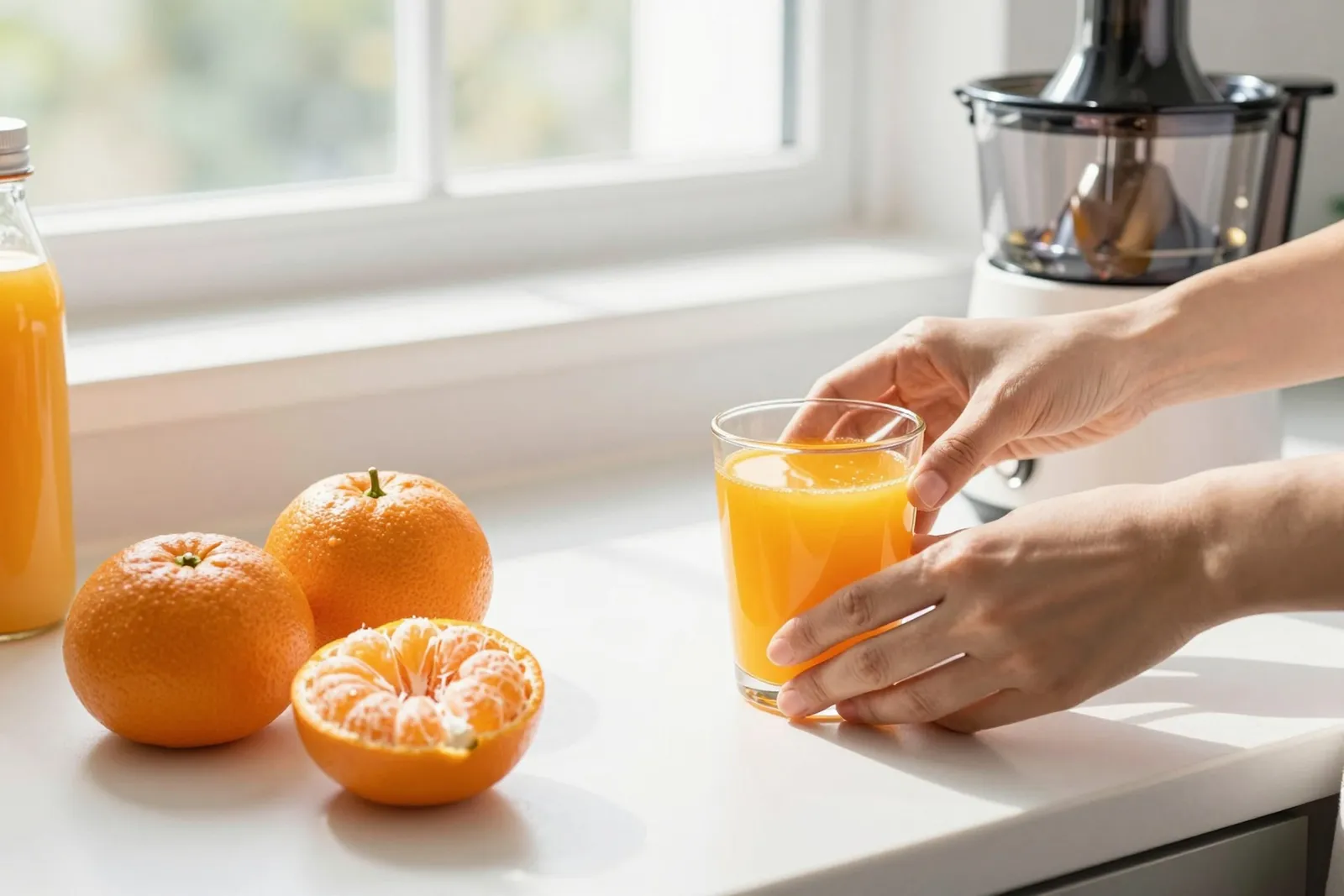
Oranges give the most juice and the classic balanced flavor. Clementines are the sweetest and mildest. Tangerines sit in between, with a more aromatic, zesty edge. All three are winter fruit, and all three juice well when peeled.
Side-by-side
| Tangerine | Clementine | Orange (navel / Valencia) | |
|---|---|---|---|
| Taste | Sweet-tart, aromatic | Very sweet, low acid | Balanced sweet-acid |
| Peel | Loose, easy | Easy, glossy | Firmer; peel or use a press |
| Seeds | Often some | Usually seedless | Navel seedless; Valencia a few |
| Juice per fruit | Small | Small | Largest |
| Best use | Mixed glasses with ginger | Kid-friendly sweet glasses | Everyday glass or base for blends |
Valencia oranges are the usual juicing orange; navels are better eaten whole and can taste bitter if the juice sits.
Nutrition at a glance
USDA FoodData Central lists raw sweet oranges at roughly 53 mg vitamin C per 100 g, clementines at roughly 49 mg, and tangerines (mandarins) at roughly 27 mg. Check the current entries on USDA FoodData Central because values vary by variety and source. Juicing removes most of the fiber, so whole fruit has more fiber than the juice.
How much to buy
| Goal | Rough plan |
|---|---|
| One 8-oz glass of orange juice | 2–3 juicing oranges |
| One 8-oz glass of tangerine or clementine juice | About 1 lb of fruit |
Yield swings with ripeness and fruit size. The juice yield calculator gives estimates for any amount.
Which tool for which fruit
| Fruit | Good fit |
|---|---|
| Oranges | Citrus press or any juicer |
| Tangerines, clementines | Peel, then use a juicer; a press works for halves |
| Mixed glass with carrots or ginger | Full juicer with peeled fruit |
A masticating juicer makes less foam with soft citrus. A centrifugal is faster but froths more. See juicer vs citrus press and the best citrus juicer guide.
Pairing ideas
- Tangerine: ginger, lemon, celery. Try tangerine ginger.
- Clementine: ginger or apple. Try clementine ginger.
- Orange: carrot, ginger, mint. Try orange or orange ginger.
Storage
Fresh citrus juice is unpasteurized. Keep it cold in a full, sealed glass jar and drink it within 24–48 hours. Details are in how to store fresh juice.
Troubleshooting and common mistakes
| Problem | Fix |
|---|---|
| Bitter juice | Peel more of the white pith; use Valencia rather than navel |
| Too foamy | Use a masticating juicer or skim the foam |
| Too sweet | Add lemon or a splash of grapefruit |
Mistakes to avoid:
- Pressing the peel along with the fruit
- Storing juice for days
- Assuming all three fruits give the same volume
Sugar-to-acid balance and flavor profile
Juice flavor comes down to the ratio between dissolved sugars (measured in degrees Brix) and titratable citric acid. Standard navel and Valencia oranges sit around 11 to 13 degrees Brix with 0.7% to 1.0% citric acid, delivering a balanced, brisk profile that wakes up the palate without feeling cloying. Tangerines run slightly sweeter and more aromatic at 12 to 14 degrees Brix, carrying floral terpene notes in their peel oil that transfer into the cup when reamed or cold-pressed. Clementines push the sugar scale highest at 13 to 15 degrees Brix while dropping citric acid down to 0.5% to 0.7%, producing a round, honey-like glass with almost zero tart bite.
Because clementines lack sharp acidity, a 100% clementine juice tastes rich on its own but goes flat when diluted over ice or paired with sweet roots like carrots. Adding 1 ounce of fresh lemon or lime juice per 12 ounces of clementine base restores crispness. Conversely, orange juice holds its structure across ice and blends cleanly with spicy aromatics in combinations like orange ginger juice, where ginger heat needs citrus acid to stay bright. Data from USDA FoodData Central confirms that raw tangerine and clementine juices pack slightly higher natural sugars per 100 grams than standard Valencia orange juice, explaining why small mandarins taste noticeably sweeter first thing in the morning.
Seasonal peak windows and ripeness cues
Buying each fruit outside its harvest window leads to dry pulp, thick pith, and bitter limonene oils. Oranges give you the longest runway: California navels peak from November through April, while thin-skinned Valencia juicing oranges take over from March through September. Tangerines—including Honey, Murcott, and Dancy varieties—hit peak juiciness between November and January. Clementines have the tightest prime window, running from mid-November through February, after which stored fruit loses moisture and develops puffy, air-gapped rinds.
| Fruit | Peak U.S. Season | Typical Brix Range | Average Juice Yield (by weight) | Whole Fruit Needed for 8 oz Juice |
|---|---|---|---|---|
| Navel / Valencia Orange | Nov–Apr (Navel), Mar–Sep (Valencia) | 11°–13° | 45%–52% | 2 to 3 medium oranges (16–18 oz) |
| Tangerine (Honey / Murcott) | Nov–Jan | 12°–14° | 40%–48% | 5 to 6 tangerines (17–20 oz) |
| Clementine | Nov–Feb | 13°–15° | 38%–45% | 7 to 9 clementines (18–21 oz) |
When shopping, ignore uniform bright color and judge by specific gravity. A ripe juicing citrus feels heavy for its diameter because the juice vesicles are swollen with water rather than dried out. Avoid clementines or tangerines with loose, wrinkled skin that compresses like a sponge; that air pocket means the segments have started dehydrating inside the peel.
Step-by-step juice extraction method
- Wash all whole citrus under cool running water for 20 seconds and scrub the rinds with a produce brush to remove surface wax and field microbes before cutting or peeling, following FDA juice safety guidelines.
- Roll whole oranges firmly against the countertop under your palm for 10 seconds to rupture internal juice sacs, while gently peeling tangerines and clementines by hand to keep bitter white pith out of the chute if using a masticating auger.
- Halve unpeeled oranges crosswise for a lever press or electric reamer, or feed peeled tangerine and clementine segments into a slow juicer at 40 to 60 RPM so the auger presses juice without shearing seeds.
- Pour the expressed juice through a fine-mesh stainless strainer to capture coarse albedo fibers and broken seeds, then chill immediately in an airtight glass jar filled to the rim to minimize oxidation.
Pulp texture, pith bitterness, and prep adjustments
Loose-skinned mandarins behave very differently inside a machine than tight-skinned oranges. Because clementines and tangerines peel effortlessly, people often toss whole peeled fruit straight into a centrifugal or masticating juicer. Keep in mind that the white stringy mesocarp clinging to mandarin segments contains concentrated bitter flavonoids. Spending 15 extra seconds pulling off thick white pith threads before juicing keeps tangerine juice clean and floral rather than astringent.
Seeds are the second bitterness trigger. Clementines are usually seedless, whereas Honey tangerines and Valencia oranges frequently hide 4 to 10 seeds per fruit. High-speed centrifugal blades crack seeds open and release bitter oils directly into the pitcher. If you prefer mechanical extraction over hand-reaming, review our breakdown on juicer vs. citrus press or follow dedicated techniques on how to juice clementines so intact seeds eject cleanly with the dry pulp.
FAQ
Do I need to peel them?
Yes for most juicers. Peeling avoids bitter peel oil. Halved citrus can go straight into a press.
Can I mix all three?
Yes. Blending them gives a layered citrus flavor; add lemon if the mix is too sweet.
How long does fresh citrus juice keep?
Best fresh. Refrigerated in a full, sealed jar, drink within 24–48 hours.
Why does fresh tangerine or orange juice turn bitter after sitting for an hour?
Crushed seeds and ruptured peel cells release limonin, a compound that turns noticeably bitter as it oxidizes in air. Reaming gently without grinding into the white pith and storing juice in a brim-full airtight glass bottle slows this reaction.
Which citrus gives the clearest, lowest-pulp juice?
Clementines produce the smoothest, lowest-pulp juice because their segment membranes are thin and fragile. Oranges have tougher segment walls and thicker juice sacs that create heavier body unless double-strained.
Can I juice tangerines and clementines with the peel on in a slow juicer?
No. Even though mandarin peels are thin, their essential oils are intensely sharp and bitter when pressed whole. Always peel tangerines and clementines first, then feed the segments into the chute.
Try these recipes
- Tangerine Juice Recipe
- Clementine Juice Recipe
- Fresh Orange Juice
- Tangerine Ginger Juice Recipe
- Clementine Ginger Juice Recipe
- Orange Ginger Juice
Explore: Juicer buying guides · Juice recipes · Green Juices · Carrot Juices · Beet Juices · Celery Juices · Citrus Juices · Tropical Juices · Berry Juices · Juice Shots · Eat the Rainbow · Red Juices · Hydration Juices · Meal-Prep Juices · Orange & Yellow Juices · Winter Juices · Purple Juices · Summer Juices · White & Brown Juices
Juice and produce pages are general kitchen information only. They are not intended to diagnose, treat, cure, or prevent any disease. Talk with a clinician for personal health questions.
Homemade juice is unpasteurized. Wash produce under running water, keep juice cold, and see the FDA’s juice safety guidance if you are pregnant, serving young children or older adults, or have a weakened immune system.