Post-Thanksgiving Ginger, Apple & Lemon Juice Guide (Kitchen Ratios & Prep)
Kitchen-tested post-Thanksgiving ginger, apple, and lemon juice ratios, cold-press vs. blender steps, leftover produce swaps, and 40°F storage.
Quick answer
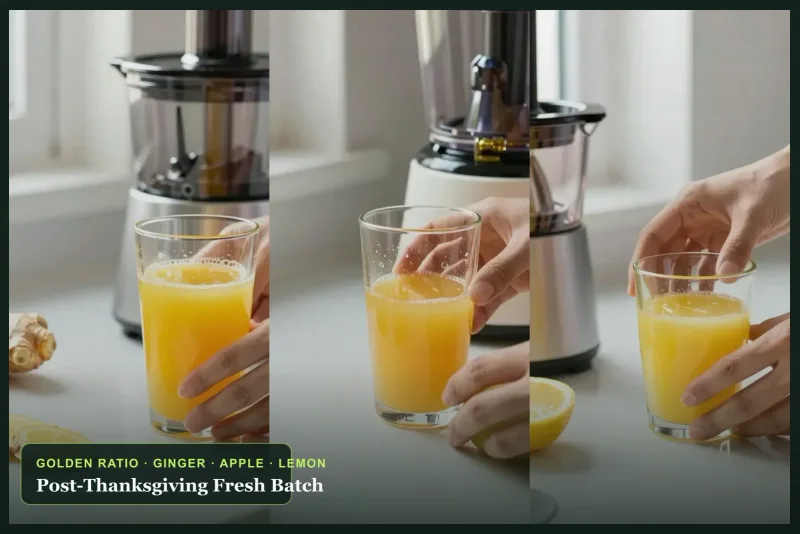
A crisp post-Thanksgiving ginger, apple, and lemon juice balances 1 inch of sliced fresh ginger, 2 sweet-tart apples, and ½ peeled lemon for a bright, peppery morning pour—never a medical detox or digestive cure. Slice ginger crosswise into ¼-inch coins so slow augers never jam, chill fresh batches at 40°F or below in brim-full glass bottles, and enjoy 6 to 8 ounces alongside breakfast within 48 hours.
Why ginger, apple & lemon work so well after heavy holiday meals
After two days of rich gravy, buttered stuffing, and sweet pies, most home cooks simply want something cold, bright, and light alongside Friday morning coffee or eggs. Framing this blend honestly keeps kitchen expectations grounded: raw produce juice is not a medical digestive cure, flush, or fat burner, and it leaves behind most of the insoluble apple fiber found in whole fruit. Instead, this classic three-ingredient combination works in the kitchen because of sensory contrast and hydration:
- Fresh ginger (Zingiber officinale): Raw ginger rhizomes deliver sharp, warming [6]-gingerol aroma and peppery bite that wake up the palate without added syrups or caffeine.
- Crisp apples: Apples supply natural malic acid, light body, and enough clean fluid yield (typically 60–68% juice by weight) to flush concentrated ginger juice out of the juicer chamber.
- Peeled lemon: Tart citric acid and vitamin C cut through apple sweetness, slow enzymatic browning in the pitcher, and brighten leftover holiday fridge flavors. Check baseline vitamin C and potassium values across whole fruits and roots on USDA FoodData Central and the NIH Office of Dietary Supplements Vitamin C Fact Sheet.
Golden post-Thanksgiving kitchen ratio & 3 batch variations
Use the single-serving (roughly 8 to 10 fl oz) base ratios below, then scale by 3× or 4× in our multi-ingredient juice yield calculator or estimate grocery spend per bottle in the juice yield and batch cost calculator. If you prefer a punchier 2-ounce morning pour, compare our winter immunity juice shots guide and ginger shot recipe.
| Batch Style | Prepared Produce Weights | Flavor Balance & Best Pairing |
|---|---|---|
| 1. Classic Ginger, Apple & Lemon | 2 medium Honeycrisp or Fuji apples (12 oz / 340 g) + ½ peeled lemon (1.5 oz / 42 g) + 1 inch ginger (0.75 oz / 21 g) | Crisp, balanced zing; similar to apple lemon ginger juice |
| 2. Tart Green-Apple Reset Blend | 2 Granny Smith apples (11 oz / 310 g) + 3 ribs celery (5 oz / 142 g) + ½ peeled lemon + ¾ inch ginger | Lower sweetness, mineral celery finish; pairs well with celery juice or green juice |
| 3. Leftover Holiday Carrot-Apple Pour | 1 Honeycrisp apple (6 oz / 170 g) + 3 medium carrots (8 oz / 227 g) + ½ peeled lemon + 1 inch ginger | Earthy-sweet way to clear the crisper drawer; close to carrot apple ginger juice |
| 4. Two-Ingredient Citrus Zing (No-Apple) | 1 peeled lemon (3 oz / 85 g) + 1 inch ginger + 4 oz chilled sparkling water (added after pressing) | Zero fruit-sugar base diluted for gentle sipping; see lemon ginger juice |
Cold-press vs. centrifugal vs. blender-and-strain extraction
You do not need a flagship $500 appliance to press ginger, apples, and lemon on Friday morning—though extraction geometry changes foam, ginger yield, and fridge shelf life. For deeper appliance testing context, read cold-press vs. centrifugal juicers for winter citrus and roots or check seasonal hardware pricing in our Black Friday and Cyber Monday juicer deals guide.
| Method | Ginger & Lemon Yield | Foam & Oxidation | Prep & Cleanup Notes |
|---|---|---|---|
| Cold-Press (Masticating, 43–100 RPM) | Highest ginger extraction; dry apple pulp | Very low micro-foam; stays bright 48 hours sealed | Slice ginger into ¼-inch coins; peel lemon pith; 3-minute rinse |
| Centrifugal (6,500–13,000 RPM) | Good apple yield; sandwich ginger between apple halves | Noticeable surface foam; drink within 20–60 min | Fastest chopping on 3-inch chutes; brush mesh screen immediately |
| High-Speed Blender + Straining Bag | Full extraction when blended with ½ cup cold water | Mild foam; slightly thicker texture after squeezing | No extra appliance needed; rinse 200-micron nut-milk bag right away |
Step-by-step post-Thanksgiving batch method
Follow this six-step kitchen workflow to prevent bitter lemon oils, brown oxidized apple juice, and stuck ginger fibers—while following FDA raw juice safety guidelines for unpasteurized produce.
- Scrub produce for 20 seconds: Rinse apples, whole lemons, and bumpy fresh ginger under cool running water with a dedicated produce brush, then pat dry with a clean kitchen towel so surface soil never enters the pitcher.
- Peel the lemon cleanly: Slice off the top and bottom ends of the lemon, then stand it upright on a cutting board and cut away both the yellow zest and thick white pith—leaving juicy inner segments intact. Review how to juice lemons if you are prepping a big weekend pitcher.
- Prep sweet-tart apples: Quarter apples lengthwise and remove seeds or bruised spots; leave thin apple skin on for extra aromatic compounds if your produce is thoroughly scrubbed.
- Coin-slice ginger crosswise: Leave clean young ginger unpeeled (or lightly scrape tough older skin with a spoon edge), then slice crosswise against the grain into ¼-inch coins. See how to juice ginger for why lengthwise strips wrap around vertical augers.
- Alternate juicy and fibrous ingredients: Drop a few ginger coins into the chute followed immediately by crisp apple quarters and peeled lemon segments. In a centrifugal machine, tuck ginger tightly between two apple wedges so the spinning disc shreds it instead of flinging pieces whole into the pulp bin.
- Bottle brim-full and chill below 40°F: Skim any light surface foam if using a centrifugal juicer, pour into clean airtight glass jars filled right to the cap to block oxygen headspace, and refrigerate at 40°F (4°C) or below within two hours.
How to use leftover Thanksgiving produce without waste
Friday after Thanksgiving is one of the best mornings of the year to clear leftover crisper-drawer produce before it wilts. Alongside apples, lemons, and ginger, several holiday staples blend cleanly into savory or tart batches:
- Extra celery stalks & parsley stems: Two to three celery ribs and a handful of flat-leaf parsley soften apple sweetness while stretching batch volume without extra fruit sugar.
- Raw carrots & fresh cranberries: A handful of firm raw cranberries (about 1 oz / 28 g) adds tart crimson color alongside sweet carrots and Honeycrisp apples.
- Fennel fronds or cucumber ends: Mild, watery cucumber or crisp fennel bulb balances spicy ginger if your household prefers a gentle, refreshing cooler instead of fiery heat.
- Save the ginger-apple pulp: Steep leftover ginger-apple pulp in hot water for five minutes and strain for warm spiced kitchen tea, or stir clean apple-carrot pulp into weekend oatmeal muffins.
Safe storage, acidity care & serving timing
Homemade ginger, apple, and lemon juice is raw and unpasteurized. Even though lemon citric acid slows browning compared with plain apple juice, bacteria and spoilage yeasts still multiply at room temperature. Follow how to store fresh juice and keep these practical kitchen limits in mind:
- Two-hour counter limit: Refrigerate pressed juice within 2 hours (1 hour if the kitchen is warm) at 40°F (4°C) or below.
- Optimal drink window: Cold-pressed batches in brim-full airtight glass jars keep bright flavor for 24 to 48 hours; centrifugal pours taste freshest within 20 minutes to 12 hours.
- Buffer spicy ginger with breakfast: Drinking concentrated lemon-ginger juice completely fasted can trigger heartburn in sensitive stomachs. Pair a 6-to-8 oz glass with toast, eggs, or oatmeal—or dilute 1:1 with cold filtered or sparkling water.
- Protect tooth enamel: Lemon and apple organic acids lower drink pH to roughly 3.0–3.5. Sip with a straw or finish in one sitting, then rinse your mouth with plain water before brushing teeth.
Mistakes to avoid
- Leaving lemon peel and white pith on: Whole-rind lemon juice turns harshly bitter from limonene oils and leaves a waxy residue inside juicer strainers; see how to avoid bitter juice for quick fixes.
- Dropping whole ginger chunks into a slow juicer: Uncut ginger knots twine around the auger shaft and can crack fine-mesh screens—always slice ¼-inch crosswise coins.
- Using only mealy red apples: Overripe Red Delicious apples turn to mushy foam with poor liquid recovery; stick to crisp Honeycrisp, Granny Smith, Fuji, or Pink Lady apples.
- Expecting a “3-day cleanse” to replace real meals: Skipping solid food after holiday dinners causes energy crashes; keep fresh juice as a bright kitchen side alongside balanced protein and fiber.
Safety notes: high-risk groups & medication checks
- FDA unpasteurized juice advisory: Pregnant individuals, young children, older adults, and anyone with a weakened immune system should avoid unpasteurized raw produce juice unless brought briefly to a simmer (160°F) per FDA raw juice safety guidance.
- Medication & reflux check: Concentrated fresh ginger can interact with blood-thinning or blood-sugar medications and aggravate acid reflux; start with a ½-inch slice (about 10 g) diluted in cold water if you are sensitive to spice.
Estimate yield & cost: Compare masticating vs. centrifugal output, bottles per batch, and cost per serving in our Juice Yield, Produce Weight & Batch Cost Calculator.
FAQ
Does ginger, apple, and lemon juice detox your body after Thanksgiving?
No. Your liver and kidneys handle detoxification naturally without special drinks. Fresh ginger, apple, and lemon juice is simply a crisp, hydrating, flavorful kitchen beverage that helps use up holiday produce—not a medical cleanse or cure.
Can I make ginger, apple, and lemon juice without a juicer?
Yes. Chop 2 cored apples, ½ peeled lemon, and 1 inch of sliced ginger, blend on high with ½ cup cold water until smooth, and squeeze through a fine-mesh nut-milk bag or layered cheesecloth.
How long does homemade ginger apple lemon juice stay fresh in the fridge?
Poured into an airtight glass bottle filled to the brim and chilled at 40°F (4°C) or below, cold-pressed juice holds bright color and flavor for 24 to 48 hours. Shake gently if natural apple or ginger starch settles.
Which apples give the best yield and flavor with ginger and lemon?
Firm, crisp apples like Honeycrisp, Granny Smith, Pink Lady, and Fuji extract cleanly with minimal foam and balance spicy ginger far better than soft, mealy apple varieties.
Try these recipes
- Apple Lemon Ginger Juice Recipe
- Lemon Ginger Juice
- Ginger Shot Recipe
- Carrot Apple Ginger Juice Recipe
- Celery Juice Recipe
- Green Juice Recipe
Explore: Juicer buying guides · Juice recipes · Green Juices · Carrot Juices · Beet Juices · Celery Juices · Citrus Juices · Tropical Juices · Berry Juices · Juice Shots · Eat the Rainbow · Red Juices · Hydration Juices · Meal-Prep Juices · Orange & Yellow Juices · Winter Juices · Purple Juices · Summer Juices · White & Brown Juices
Juice and produce pages are general kitchen information only. They are not intended to diagnose, treat, cure, or prevent any disease. Talk with a clinician for personal health questions.
Homemade juice is unpasteurized. Wash produce under running water, keep juice cold, and see the FDA’s juice safety guidance if you are pregnant, serving young children or older adults, or have a weakened immune system.